Does Sea Water Damage Silver? Caring for Silver Jewelry in Salt Water
Does Sea Water Damage Silver? Caring for Silver Jewelry in Salt Water
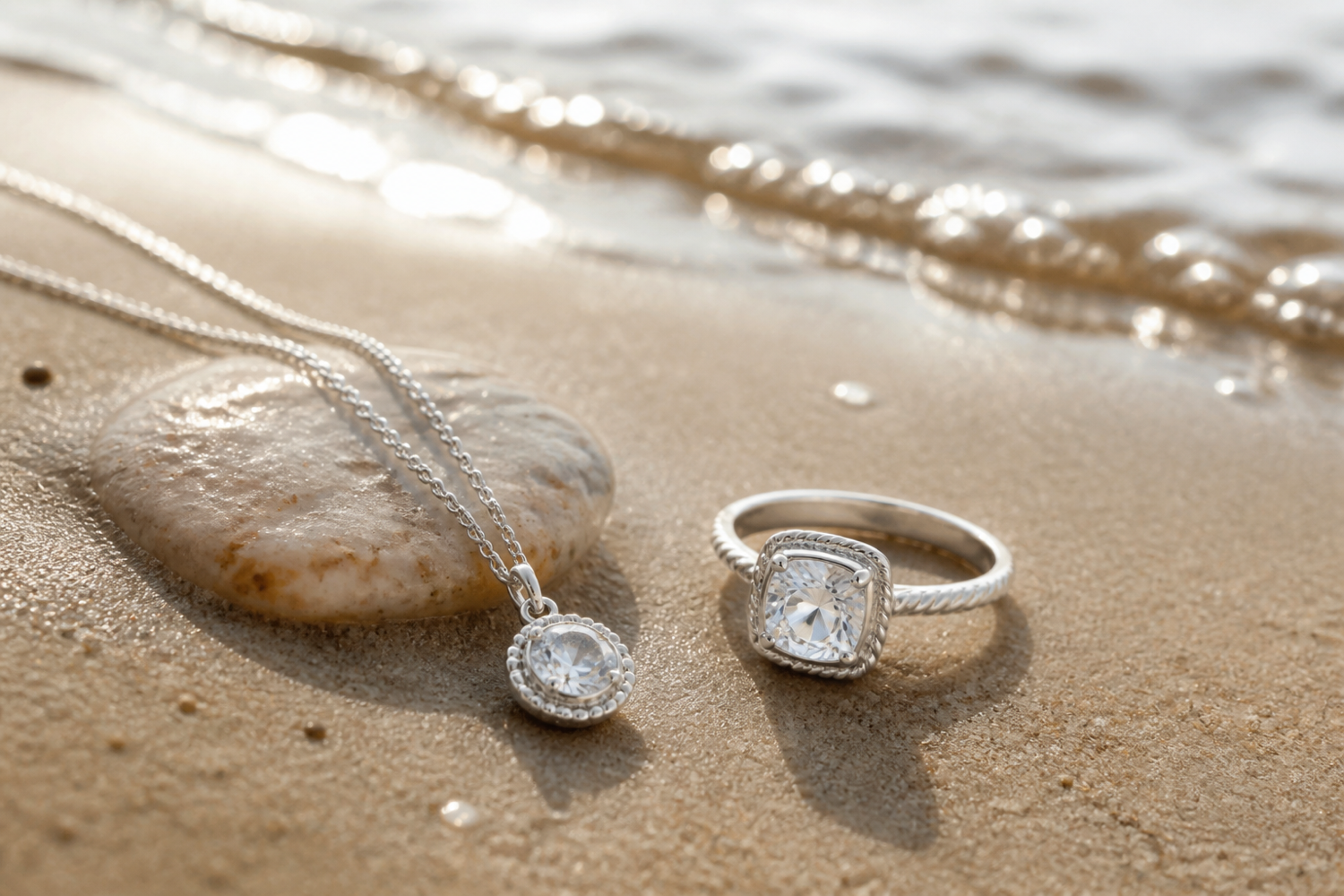
Yes, seawater can tarnish silver jewelry. The salt (sodium chloride) and minerals it contains trigger the oxidation process on the surface of silver much faster than normal. The good news is that this is usually not a permanent damage, but a cosmetic tarnish that can be removed with proper cleaning.
Why Does Seawater Tarnish Silver So Quickly?
Silver reacts with sulfur compounds in the air and tarnishes over time — this is a natural process. Seawater accelerates this process because the chloride ions in it cause an additional chemical reaction on the surface of silver. The moisture from saltwater also prepares the ground for oxidation as it stays on the metal surface longer. Therefore, you may notice a tarnish on your silver jewelry after a beach vacation that occurs faster than expected.
Does Silver Tarnish in Saltwater, or Does It Suffer Permanent Damage?
Don't worry — the tarnish caused by seawater is a superficial oxidation and does not alter the structure of silver. It is possible to restore its shine with the right methods. The main concern is that in jewelry with stones or plating, saltwater may weaken the adhesive or fade the plating over time; this situation may not be reversible, unlike tarnishing.
Should You Wear Silver Jewelry While Swimming?
If possible, we recommend removing your silver jewelry before entering the sea. This reduces the risk of tarnishing and eliminates the possibility of losing the jewelry due to sand, sunscreen, or wave movement. If you prefer to wear it (for example, if it's a ring or necklace that you wear constantly), following the steps below after leaving the sea will greatly prevent tarnishing.
What Should Be Done with Silver Jewelry That Has Come into Contact with Sea Water?
Rinse Immediately: As soon as you take your jewelry out of the sea, rinse it with fresh (tap) water; do not wait for the salt residue to dry.
Dry with a Soft Cloth: Instead of leaving it wet, gently dry it with a soft, lint-free cloth.
Store Without Air Exposure: Storing it in an airtight box or a sealed bag after drying slows down oxidation.
Clean Lightly if Necessary: If you notice slight tarnishing, gently wipe it with a baking soda-water mixture or a soft silver cloth.
Is Rhodium-Plated Silver More Resistant to Sea Water?
Rhodium plating adds a thin protective layer over silver and is more resistant to tarnishing than standard silver — hence it has a slight advantage when in contact with sea water. However, the plating can wear off over time and with frequent exposure to saltwater. So, rhodium plating delays tarnishing but does not eliminate it completely.
Does Pool Water Also Damage Silver?
Yes, and in some cases, it can be more aggressive than sea water. The chlorine in pools can lead to faster and sometimes permanent staining on the surface of silver. The general rule for both sea and pool is the same: if possible, remove it, and if you wear it, make sure to rinse and dry it afterward.
Conclusion: Using Silver Jewelry on a Beach Holiday
Sea water does not damage silver but accelerates tarnishing — it is important to distinguish between these two concepts. With a few simple habits (rinsing, drying, proper storage), you can safely use your silver jewelry during a beach holiday and restore its former shine with a few minutes of care afterward.
Frequently Asked Questions
Does Silver Tarnish in Salt Water? Yes, salt water accelerates the oxidation of silver and causes tarnishing. However, this tarnishing is superficial and can be cleaned.
Does Sea Water Damage Silver? Sea water does not cause permanent damage to the structure of silver; it only leads to tarnishing on the surface. In pieces with stones or plating, the adhesive or plating may be affected over time.
How to Clean Silver Jewelry After the Sea? Rinsing with fresh water and drying with a soft cloth is often sufficient. If tarnishing is permanent, how to clean silver jewelry you can apply the methods in our guide.
Teacher's Day is celebrated every year on November 24 in Turkey. The hardest part of choosing a gift for a teacher is finding the balance: something not too personal but...
The swan motif symbolizes elegance, loyalty, and lifelong commitment. Swans remain bonded to their partners for years, and they display calmness while gliding on water...
Heart motif; symbolizes love, commitment, and the clear expression of emotions. It is the only symbol that leaves no room for words — that’s why in gift jewelry...
The evil eye symbolizes protection from negative energy and the evil eye. It is one of the oldest symbols in Anatolia and has been carried for the same purpose for thousands of years:...
The butterfly motif symbolizes transformation, freedom, and rebirth. The journey from caterpillar to butterfly is one of nature's most striking transformation stories — that's why...
The angel wing motif symbolizes protection, guidance, and the message of "I am with you." It is one of the most elegant ways to send an invisible wish for protection to your loved one. The same...
The lotus flower symbolizes purity, rebirth, and the ability to remain beautiful despite difficulties. It rises from the muddy waters and blooms cleanly at the surface, making it a symbol of resilience...
Silver has been both a medium of exchange and a symbol of elegance throughout human history. In recent years, with economic fluctuations and increased industrial demand...
Choosing a gift as we enter a new year is one of the most elegant reflections of the value we place on our loved ones. If this New Year, you want it to be 'lasting, every moment...